

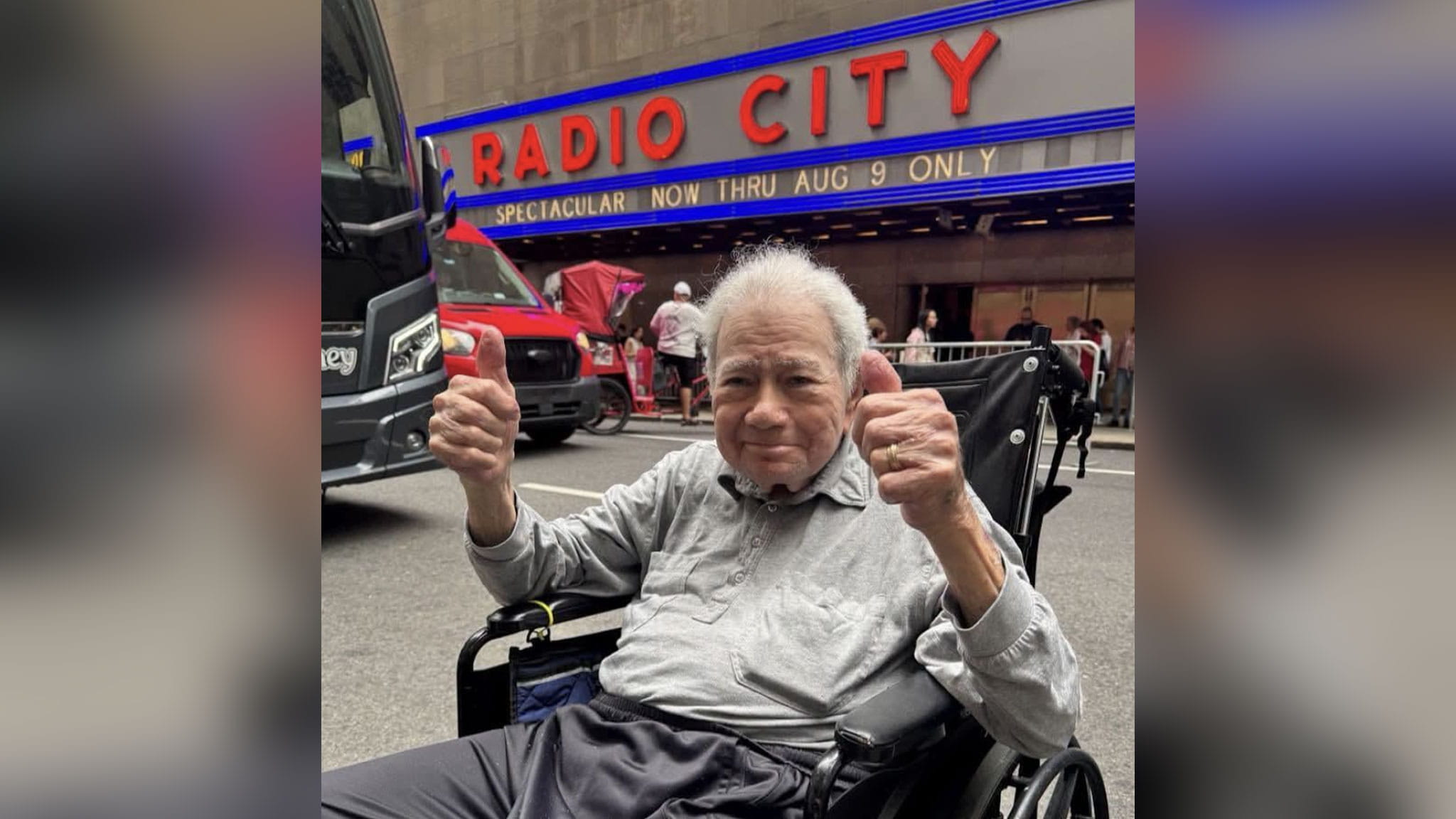
81 Years Living with Type 1 Diabetes. How Does Yudi Rubin Do It?
November 11, 2026
Before interviewing Yudi, I visited him at the nursing home where he lives. You’d be quite right to call Yudi a ‘survivor’. He has lived eighty one years with this disease and has no complications. He is legally blind, (due to macular degeneration) and still takes responsibility for his care.
For me, Yudi’s survivorship includes him being a self-proclaimed “cowboy,” or in my words “maverick”. He knows his mind and often presses clinicians so that his treatments respect his gut feelings. This would not surprise the nurses who give Yudi his daily injections, and who announce the amount they’re going to give him before they get his blessing to do so.
Diagnosis Age: 10
Current Age: 91
Years with T1D: 81
riva: You were diagnosed in May, 1945, the year World War II ended. That, in addition to your eighty one years feels monumental. Tell me how you found out you had type 1 diabetes at the age of ten.
Yudi: I had the typical signs of diabetes, thirst and urinating, and it was out of control. I didn’t know what it meant. Then my doctor decided based on how I was acting that I might be going into a coma. So they sent me to the Lawrence Memorial Hospital. And when I got there, I went into a coma. I was in a coma for two days. At some point they gave me insulin and I came out of the coma.
riva: Then you were released from the hospital and were sent home with insulin and syringes?
Yudi: Not at all. After two weeks they sent me to the Joslin clinic in Massachusetts. I was there for a couple more weeks while they got my blood sugar stable, monitored me, and I learned how to inject myself.
riva: We’re talking 1945, eighty-one years ago, you were ten years old. What was it like for you? How did your parents handle it?
Yudi: My mother was given a menu of what I could eat. Joslin recommended every morning that I have bacon and eggs. It wouldn’t be a big deal but my parents kept a kosher house. They had to adjust their Jewish feelings, and they did. But it created another problem. I had two brothers, one older and one younger, and the bacon smelled so, so good they wanted it too but weren’t allowed to eat it!
riva: So they wanted your bacon, ha!
Yudi: You bet! And that went on for quite a while until we learned to substitute another food for the bacon.
riva: What do you recall, Yudi, about when you went back to school and were now different than the other kids?
Yudi: Honestly, it was terrible. The Joslin people said because of the type of insulin I was taking that midway between the morning session I’d have to eat milk and crackers. Nobody thought ahead, like what is this going to do to me when the teacher stopped the class and made an announcement, which she did every day at 10:30. She said, “Julian, go out in the hall and have your milk and crackers!” Here I am sitting with kids, and a lot of those kids had parents from other countries. Well, once they heard that little singy-song announcement in the morning, “Julian, go out and have your milk and crackers,” it was so embarrassing.
riva: I can imagine how painful that was. How did you manage your blood sugar since you didn’t have any of the devices we do today, not even a glucose meter.
Yudi: I had a syringe and my father would have to get new needles for it from the pharmacy. But that didn’t happen often so I got used to using dull needles. That’s when my injections really hurt.
riva: How did you think about this new life you now had? All these things you had to do or not do, and taking shots?
Yudi: I just accepted it. I accepted the situation. I really didn’t put up much of a problem to my parents. I just went along with it and what they told me to do and what the doctors and nurses told us to do. I remember at Joslin the people there really reinforced how necessary it was to live a certain lifestyle. I had one nurse at the Lawrence Memorial Hospital who I became very close to. During my two week stay there she had me repeat one action over and over. She’d have me draw water out of a bottle with a cap on it and inject it into an orange. Maybe since there was no television, having this to do helped make life bearable. When they released me she wrote a little poem for me that I’ve never forgotten, “When you are old and cannot see, put on your specs and think of me.”
riva: That’s a little prophetic, isn’t it?
Yudi: Yes, it is.
riva: And what was it like for your parents?
Yudi: After I was home from Joslin, the next day after breakfast my mother said, “Go out and play with the kids,” and that’s what I did. The only thing is she would wrap three or four lumps of sugar in aluminum foil and I had to keep that in my pocket. I knew what low blood sugar felt like and she told me if I feel that, just eat the sugar. So that’s what I did. She made it known to the group that’s how it was and when it was time for dinner she came and called me home.
riva: I imagine your parents taking it in stride like that helped normalize it for you and made a difference in how you managed it.
Yudi: Absolutely. My parents were given a book that Dr. Elliot Joslin wrote about living with type 1 diabetes. He wrote, and he had told my parents, that I wouldn’t live past the age of thirty and I would never have children.
riva: Well, I think you made a fool of that rule! When I was diagnosed fifty four years ago in 1972 I was told my life would be fifteen years shorter than the average and I shouldn’t have children. We’re proving this is no longer the case. How many children do you have?
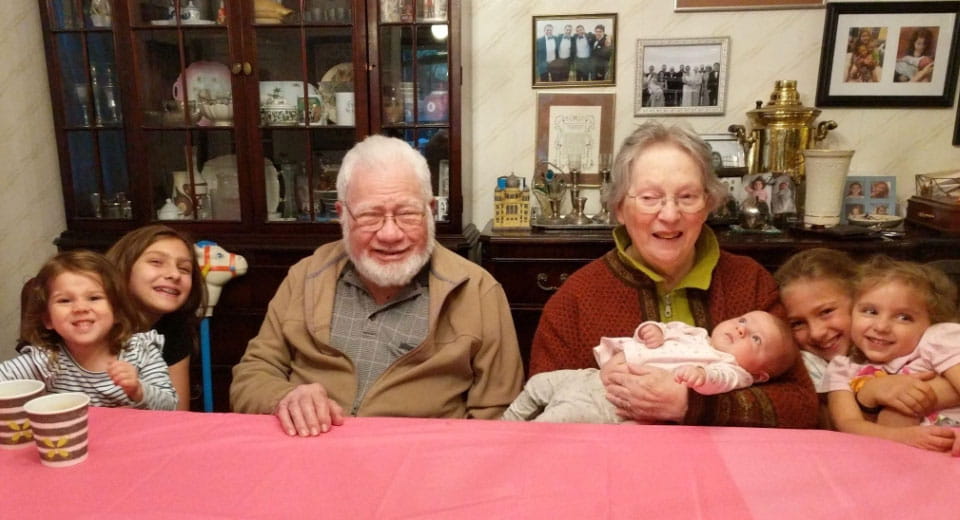
Yudi with his wife and great grandchildren
riva: Tell me how you met your bride, and was she hesitant to marry you because of your diabetes?
Yudi: Well, that’s a story. I met her at a beach community not far from where I lived. She and her parents would come down from Connecticut to this one part of Ocean Beach in New Jersey. I’d seen her before but I’d just received a new used car from my father, so on that pretext, I asked if she’d like to go for a ride. She joined me and we went driving all around Southern Connecticut. We made arrangements to meet the next night. We went for a drive again but this time we stopped where there was a lighthouse on Pequot Avenue. And you know, being near a lighthouse when its light is flashing is a very romantic thing. And then, well, nature took its course.
riva: At what point did you tell her you had type 1 diabetes?
Yudi: I told her right at the beginning and she accepted it with no problem. Unfortunately, at the time having diabetes was like a scourge. Her parents were afraid she might wind up not being my wife, but my caretaker. And of course they didn’t want that for her. Yet we got engaged even while her parents were convinced we should break it off. It was a very tough emotional time, but she decided the engagement stands and we would be married.
riva: Smart woman and strong I gather.
Yudi: Absolutely. She knew her own mind. We had a long and happy marriage. You know no one can predict life. It’s in God’s hands and what God decides will be. In our case, I wound up being my wife’s caretaker after she fell and also got a terrible burn on her leg. And the caretaking was done with love and it only increased our feelings for each other.
riva: Tell me, what type of work did you do?
Yudi: I worked for my father in his glass business. He wanted me to wear a suit, drive around and call on clients. But I said no, I will work on the shop floor and handle the glass and do the hard labor. I’m going to do what the workers do and learn how to run the shop. I wanted to feel at the end of the day that I’d worked hard and I’d learned something.
riva: Doing physical labor like that you must have had low blood sugar a fair bit of the time.
Yudi: I could tell when I was low. If my mouth was full of saliva my blood sugar was high. If it was dry, it was low. We had a candy machine on the floor and if I was low I’d just go get a Baby Ruth bar.
riva: Why did you want to do the hard labor at your dad’s shop?
Yudi: Well, it was a little bit scientific on my part. If I was driving around outside and I went low I didn’t know if I could get somewhere to eat something. Being in the shop I had access to what I’d need. It also allowed me to eat some incredible food from the Italian deli across the street. [He laughs] And at the end of the day lifting and carrying these huge pieces of glass, unloading trucks, doing a lot of heavy work, I felt good.
riva: I wouldn’t be surprised if all that physical activity has helped you live this long.
Yudi: I truly believe so. And when I was handling the glass, I didn’t think about anything diabetic. When you’re handling a huge piece of glass with another person, your lives are in the balance. If that glass hits the floor we both could have been killed.
riva: I know you use a CGM and I understand some years ago you were also using an insulin pump. How was that?
Yudi: It was wonderful. It was really helpful but then my blindness prevented me from being able to use it. I was switched to pre-filled syringes and that’s when I started with Dexcom. I keep the receiver in my shirt pocket but I can’t see the numbers very well. I have this magnifying device here on my table.
riva: Did you ever feel shame or stigma because of your diabetes?
Yudi: No, never. When I started my freshman year at the University of Connecticut, I had a roommate and the only thing I had to figure out was how to explain to him that my shots were medicine, that I wasn’t injecting dope like everyone else. He just shook his head and said, “Whatever.” I never felt it was a shame to be diabetic. Not at all. I felt it was a challenge, not a shame. My older brother looked out for me, but I feel bad for my younger brother. It was tough on him. He was only five when I got diabetes. I’m sure he needed the attention of my family growing up and I think I denied him that.
riva: I wouldn’t say you denied him that, just the circumstances made it that way. And you never know where people get their strength from. You’ve lived eighty one years with the most intense self-managed condition, both being able to manage it yourself and now in a nursing home where you’re dependent on others.
Yudi: For whatever reason I just accepted the fact that I have it. I never said, I wish I didn’t have it. Maybe it’s my nature. Just whatever has come my way, I’ve accepted it. The good and the bad. My mother told me the story of her life in Poland with the pogroms before she came to this country and she never dwelt on it. Just telling me stories of what happened, I admired her greatly, the way she handled it. She came here and made a life for herself and her family without complaining. My dad grew up in Lithuania under the Russians. When he told me stories of his childhood, they were positive even though you know it couldn’t all be. I felt what happened to me wasn’t as bad as what happened to them. I’ve had a good life. A wonderful family, I had work buddies on the job. I don’t know if I would have been the same person growing up without type 1 diabetes, but it made my life however it is, and I think it turned out for the best.
riva: As we get to the end, tell me why you wanted to do this interview
Yudi: I hope if anybody has the chance to read this, it’ll help make their lives better. You know, from the time I can remember, when I was attending the Joslin Diabetes Center, I volunteered my services. I knew they had a group meeting once a month mainly with teenagers to answer their questions. So I volunteered to go to the meeting and help in whichever way I could. I was never taken up on it.
riva: Well today we’re changing that. What else would you like to say about this journey you’ve been on?
Yudi: I want doctors, nurses, and dietitians to know about the reality of living with type 1 diabetes. I’d tell doctors, don’t treat my diabetes out of a computer. Each person is different. I know it’s difficult to treat each person as an individual in an institution but that’s the only way that you’ll be able to best manage it. Dietitians need to work closely with kitchen staff and make sure that they understand the relationship between the insulin that’s being given and the amount of food that is
served. Sometimes it’s a problem. So I keep orange soda where I can reach it and we have a big box of snacks like chips and cheese doodles over there. I’d tell people they can be just a little bit freer if they learn their own body’s signals and trust their own judgment instead of only following every rule in a textbook.
riva: Looking back Yudi, what would you tell a ten-year-old who just got type 1 diabetes?
Yudi: I would tell him about my experience of what my mother’s first words were to me when I came home from the Joslin Center, “Go out and play with the kids.”
One Final Note: Julian Rubin is one of nineteen people to receive the Joslin Diabetes Center’s 80- Year Lifetime Achievement Award. A follow up interview is being conducted with Yudi that will highlight his experience living in a nursing home.
Recent Stories & News

Choosing Your 2027 Medicare Plan: An Open Enrollment Guide for People with Type 1 Diabetes
We have created this guide on how to choose your 2027 medicare plan including important dates, commons mistakes, and a checklist of things to do. There are also special insights on what you need to keep in mind, programs that could be helpful, and changes from the previous year. Read the full article for everything you need to know!
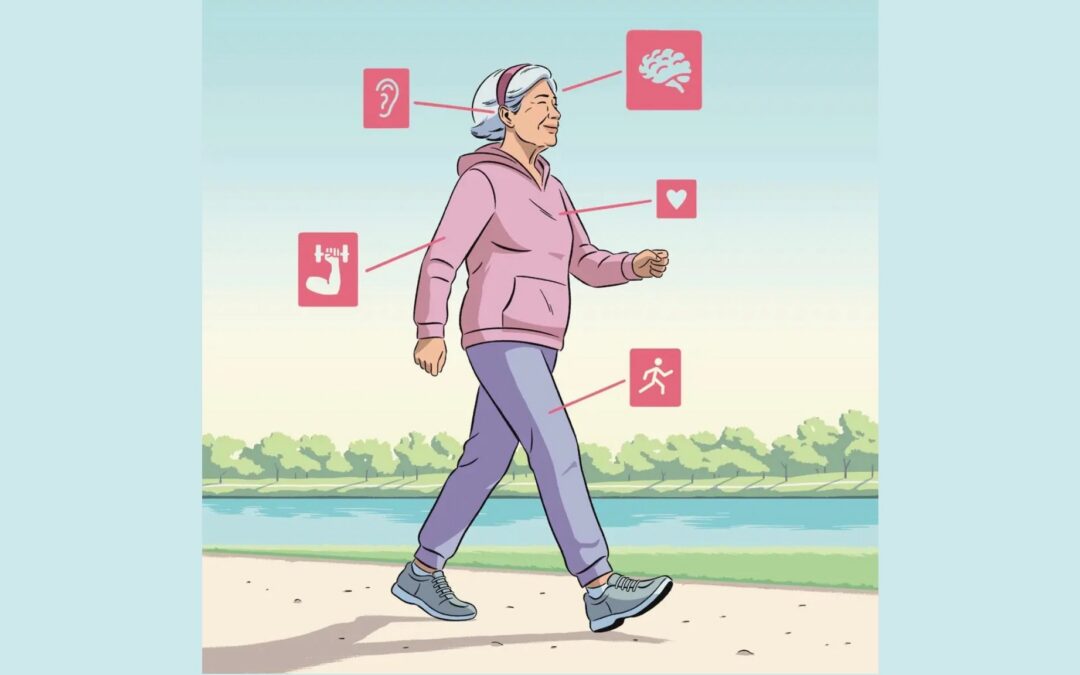
Intrinsic Capacity: The Most Important Longevity Term You’ve Probably Never Heard Of
Intrinsic Capacity is a new term experts are hoping to use to determine a person’s overall health in an effort to implement interventions for a longer, healthier, and happier life. Intrinsic Capacity is measured in five different key areas including cognition, locomotion, sensory capacity, psychological well-being, and vitality. Several studies are being implemented across the US to learn more on how to improve the accuracy of this metric and use it, eventually, for all ages.
LADA: Why So Many Adults Are Misdiagnosed With Type 2 Diabetes
A YouTube discussion from Taking Care of Your Diabetes (TCOYD) on why 4 in 10 people who are diagnosed with Latent Autoimmune Diabetes in Adults (LADA) are told they have Type 2 Diabetes first and the impact of this misdiagnosis on their health and progress.

Interview – An Endo’s View: From the Other Side of the Examination Table
I conducted the interview below with my own endocrinologist Dr. David Lam. Our first visit lasted 90 minutes. We talked about diabetes only the last half hour. Lam is smart, tech savvy and responsive. As you might have guessed he is also compassionate, prizes partnership, and sees me as a person, not merely a condition. My husband was impressed when Dr. Lam stayed in text-touch with me, switching me from Lantus to Tresiba, over a weekend. I wanted to understand how he sees our challenges aging with type 1 diabetes and the ones he faces every day working within our industrialized health care system. He didn’t hesitate when I asked for this interview, so here’s an endocrinologist’s view from the other side of the examination table.

The New Science of Brain Workouts, Beyond Sudoku and Crosswords
Forget holding hands—new research reveals a surprising twist in how two people can become a dynamic duo against sudden loss of balance. A recent study, published in the Journal of the Royal Society Interface, demonstrates that when two individuals walk side by side, a rigid link between them dramatically accelerates balance recovery after unexpected slips.
0 Comments